
Designing the Journey: Spring travel brings fresh perspectives

Pittsburgh International
I’ve always loved getting away during spring break. For my family, it’s a chance to finally warm up, trading our depressed gray Ohio skies for Florida sunshine and warmth.
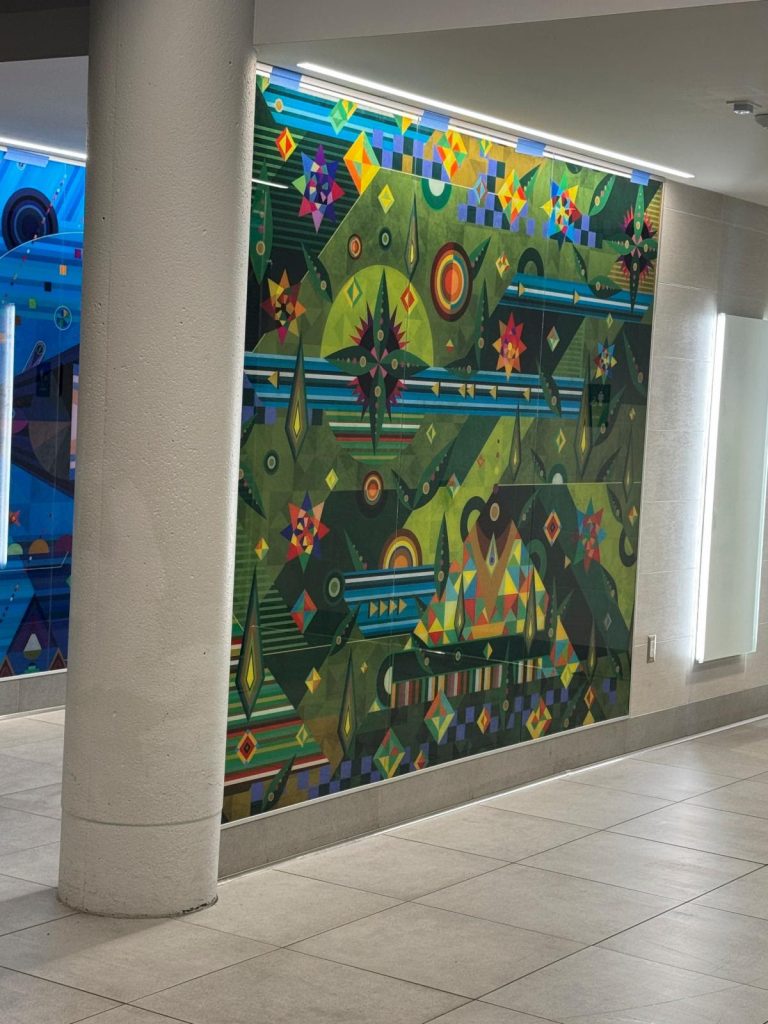
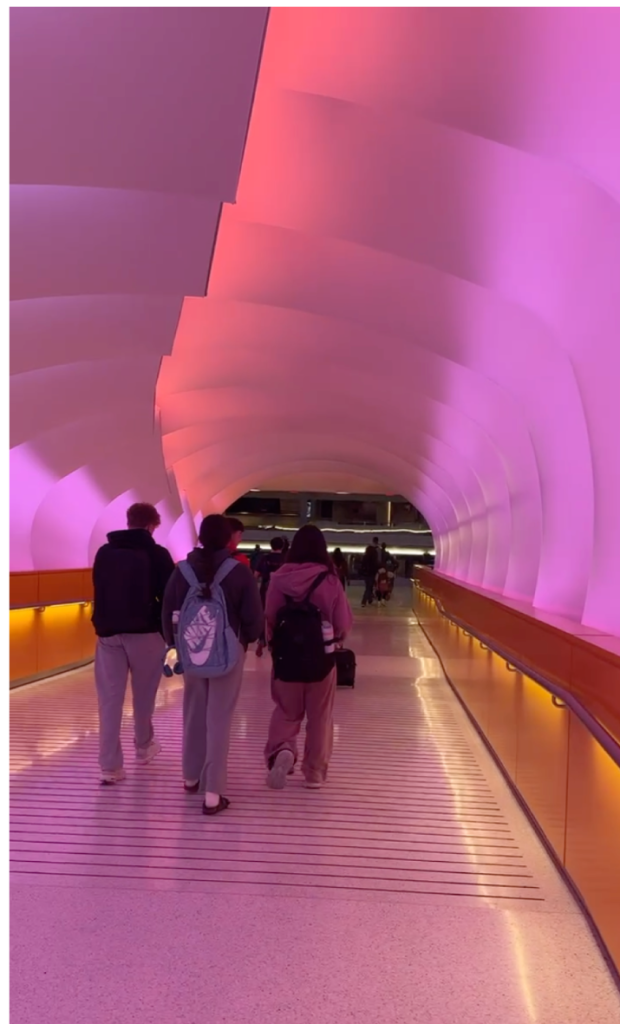
I always consider the journey to be part of the excitement. The renovation at Pittsburgh International Airport has made the terminal part of that excitement!
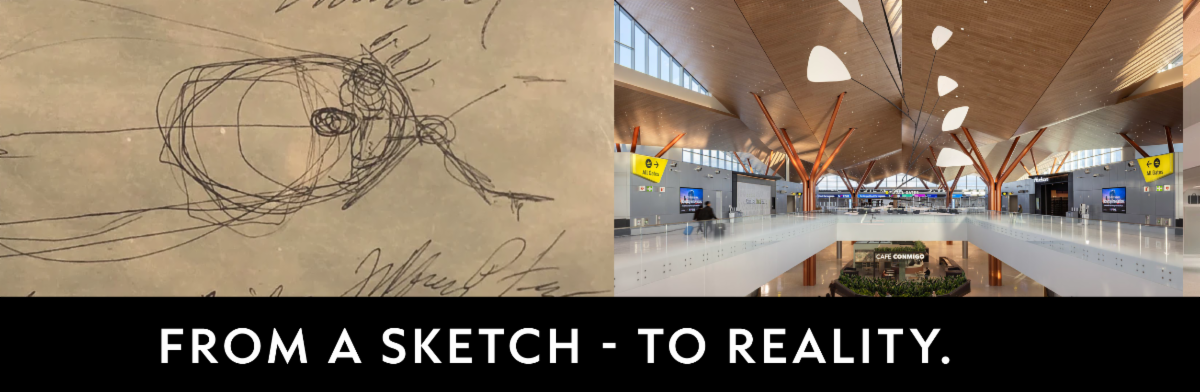
My kids couldn’t believe how much time I spent snapping photos and looking up at the beautiful ceiling. Like many designers, I’m drawn to the interplay of nature, light, and architecture and this space captures all three beautifully. The design draws heavily from nature and the surrounding Western Pennsylvania landscape. The openness, the views of the sky, the thoughtful structure, it all feels intentional and inspiring.
Naturally, I found myself wondering about the design process behind it all. What I discovered made it even more compelling: the entire concept began as a simple sketch on the back of a receipt.
Back in 2015, Pittsburgh International Airport CEO Christina Cassotis was discussing the challenge of modernizing the airport with other aviation leaders. The existing layout – two separate buildings connected by a half-mile tram – was outdated and inefficient.
That’s when Jeff Fegan, former CEO of Dallas Fort Worth International Airport, had a bold idea: combine landside and airside operations into one unified terminal. He illustrated the concept on a restaurant receipt. That quick sketch evolved into a $1.7 billion transformation resulting in this new terminal that opened a decade later.
For the city, this project is more than just infrastructure – it’s a reintroduction. With major events like the recent NFL Draft expected to draw hundreds of thousands of visitors, the airport serves as both a first impression and a lasting memory. And in a region where travel supports billions in economic impact and tens of thousands of jobs, that impression matters.
For me, the airport is a reminder that great design doesn’t always start with something grand. It can begin with a simple idea, sketched in an ordinary moment, and grow into something that shapes how people experience a place, a business, or an organization.


Meaningful Design:
Start with a clear problem
Identify what isn’t working before jumping to solutions.
Embrace simple, bold ideas
Transformative concepts often begin as quick, unpolished thoughts – like a sketch on a receipt.
Design with purpose, not just aesthetics
Every element should serve a function while enhancing the experience.
Center the human experience
Consider how people think, feel, and engage—from first encounter to lasting impression.
Draw inspiration from context
Let local culture, traditions, environment, and identity shape the design.
Balance innovation with familiarity
Introduce new ideas while preserving elements that feel recognizable and comforting.
Collaborate and stay open to input
Great design is rarely created in isolation – ideas evolve through conversation.
Design for first and lasting impressions
Every interaction shapes perception. Each moment should be intentional, consistent, and memorable.
Elevate everyday experiences
Turn routine moments – like traveling through an airport during spring break – into something memorable.