
How characters can build a connection faster than campaigns
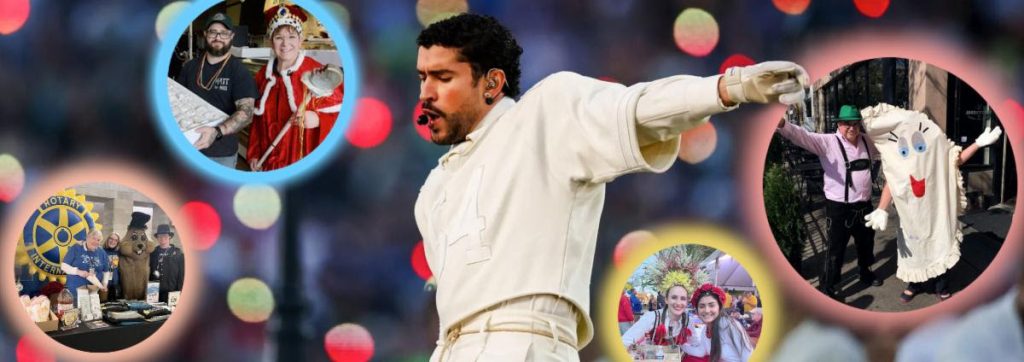
When Bad Bunny stepped onto the Super Bowl stage this year, it wasn’t just a halftime performance — it was a cultural moment.
The NFL understood something marketers sometimes forget: people connect to personality before they connect to product. Ratings followed not just because of football, but because an icon brought energy, identity, and a sense of belonging to the screen. That same principle applies at every scale — from the Super Bowl to your neighborhood festival.
At MARQUEE, we’ve watched this play out locally in powerful ways.
When PolishYoungstown introduced Stan the Pieróg, he quickly became more than a costume. What started as a playful nod to heritage became a recognizable, huggable ambassador. (Check Facebook for the time he was chased down West Federal Street)
When Stan, or the Pączki Royalty for that matter, show up for National Pierogi Day or Pączki , Polkas & Piwo at Kravitz Deli, they don’t just pose for photos. They visit tables. They hug parents and grandparents. They delight kids. They appear in social feeds and give people something to rally around — while simultaneously boosting a small business. Simply standing inside the Deli on a random weekday, Stan generates more organic social reach than some paid campaigns.
That’s not cute marketing. That’s strategic brand extension.
Why Mascots Work
A logo lives on a banner. A mascot lives in someone’s camera roll. Mascots and visual personas do more than decorate an event — they activate it.
Advantages:
- Increase photo shareability
- Drive social media engagement
- Strengthen brand recognition
- Create continuity year over year
- Humanize your event or organization
- Turn attendees into ambassadors
- Provide media with a compelling visual hook
- Extend brand life beyond a single event
Similarly, Simply Slavic’s Rodina evolved from a commissioned art piece into a living embodiment of the organization’s mission and spirit — hospitality, heritage, and celebration. She pours samples, greets guests, and becomes the face of a festival built on family. Rodina is a visual anchor tying together branding, beer, merchandise, and memory.
And sometimes, you don’t need a foam head — you need embodiment.
When Jack Kravitz and I hosted a huge Oktoberfest and showed up in authentic German trachten, we weren’t playing dress-up. We were signaling immersion. Tradition. Permission to celebrate.
Here’s the real talk…
People don’t photograph stage schedules. They photograph experiences. This isn’t about gimmicks. It’s about identity. In a content-driven world where attention is fractured, and algorithms reward personality, a recognizable, repeatable character gives your audience something to follow — literally.
Bad Bunny at the Super Bowl wasn’t random. He boosted ratings because he represents something larger than a performance. It was strategic cultural alignment.
Stan the Pieróg isn’t random. He represents heritage with humor.
Rodina isn’t random. She works because she represents family and a sense of belonging.
Mascots aren’t gimmicks. They’re memory anchors. When people see themselves reflected in a character — through heritage, humor, tradition, or shared values — they lean in. They return. They bring friends.
When planning an event, launching a campaign, or building community loyalty, first identify who or what represents its spirit, then intentionally define the face of the experience you want to create. Because in 2026, attention doesn’t just go to the loudest voice. It goes to the most memorable one.
Attention fades. A beloved character builds a legacy. And honestly…my legacy just might be that pierogi!
— Aundréa Cika Heschmeyer, President & CEO